
After the oil: Jobs and economic impacts from UK offshore decommissioning
Redwater Insights has commissioned research into the employment and economic impacts from oil and gas decommissioning in the UK. The report was conducted by Paul Keenlyside and Dr Jana-Maria Albrecht with economic analysis from Transition Economics.
Key Findings
Safely removing old oil and gas infrastructure from UK waters can play a key role in supporting oil and gas workers and communities as production declines. Provided that the government ensures operators meet their legal obligations to decommission, and takes steps to relieve supply chain bottlenecks, we find that decommissioning the UK Continental Shelf (UKCS) can deliver the following benefits over the next decade:
Benefits
Source of £25.6bn of investment: We estimate a baseline spend of £25.6bn on UKCS decommissioning.
More than 30,000 jobs supported annually: Decommissioning could deliver approximately 11,300 direct full-time equivalent jobs per year over the next decade, plus 13,500 indirect jobs and 6,000 induced jobs (30,800 total), with many roles in essential, skilled trades facing UK-wide shortages. Up to 25,000 of these roles would be in the UK under a high local content scenario.
Critical skills bridge for 15,000 workers: Over the next decade, the sector can extend careers for approximately 15,000 individuals transitioning from oil and gas production, avoiding a “cliff-edge” loss of jobs and skills and saving £350m in retraining costs. Approximately 5,500 decommissioning workers will be available to transition to offshore wind, Carbon Capture and Storage (CCS),and hydrogen sectors when decommissioning winds down in the early 2040s.
£6.8bn direct economic contribution to the UK: Under central local content assumptions, decommissioning could add £6.8bn in direct Gross Value Added (GVA) to the UK economy over the next decade, with a further £9bn in indirect and induced GVA (Total £15.8bn). Were all work to be undertaken locally, direct and indirect GVA could reach £20bn.
Opportunity for investment in innovation: We model Research and Development (R&D) investment in decommissioning at £470m over the next decade, driving innovation in subsea robotics, cutting technologies, and circular economy capabilities, such as steel recycling. At 7% of direct GVA, this compares favourably to other sectors.
However, these benefits are not guaranteed, and a shift in the government’s approach – towards proactive planning, coordinated resource allocation, investment in infrastructure, and enforcement of operator liabilities – is critical. Without this, decommissioning activity could fall dramatically below forecasts while costs balloon. A status quo approach risks disrupting UK supply chains, eroding the skills base, and ultimately shifting clean-up liability onto taxpayers. Our analysis finds that the following challenges arise:
Challenges
Systemic delays and major bottlenecks: 500+ wells are currently overdue for decommissioning, due to an overly flexible regulatory framework, lack of enforcement powers, supply chain bottlenecks (particularly heavy lift vessels and rigs), and operator reluctance to invest. There is a risk of a 30-70% shortfall against forecast decommissioning activity over the next decade.
Local content challenge despite proximity advantage: While the North Sea Transition Authority (NSTA) reports that 90%+ of the value of decommissioning contracts go to UK-based organisations, we estimate actual UK content at 66%, despite UK ports being nearest to 91% of installations.
Ballooning costs post-2035: Delaying decommissioning by many years will create substantial additional costs: well degradation over time will push up well plugging and abandonment costs; structural deterioration on topsides and substructures will add costs from additional preparatory work, repairs, and sectional removal; and as workers retire or leave the sector, the loss of first-hand knowledge about specific structures, and loss of skills generally, will increase project time and costs.
Regional hubs
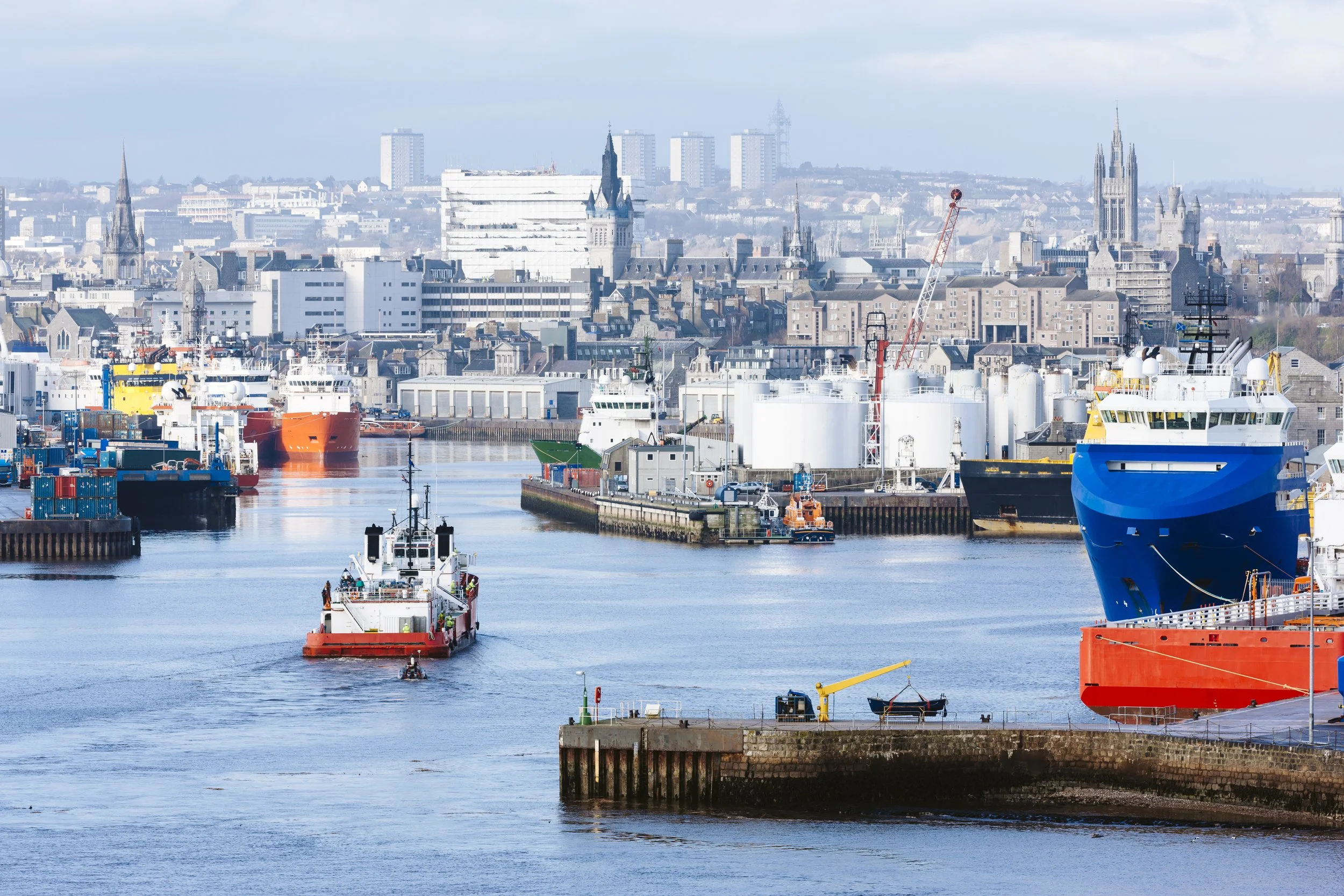
The economic impacts of decommissioning will be concentrated in key hubs across the UK. The report breaks down the impacts on five key regions, including:
Aberdeen
East Anglia
Teesside
Tyneside and the North East
Scotland
“There is a fast closing window for proper decommissioning. We need urgent action from government, regulators and most importantly from operators who are legally obliged to ensure their wells are cleaned up properly.”
- Redwater Insights Director of Legal Sophie Marjanac
Occupations profile
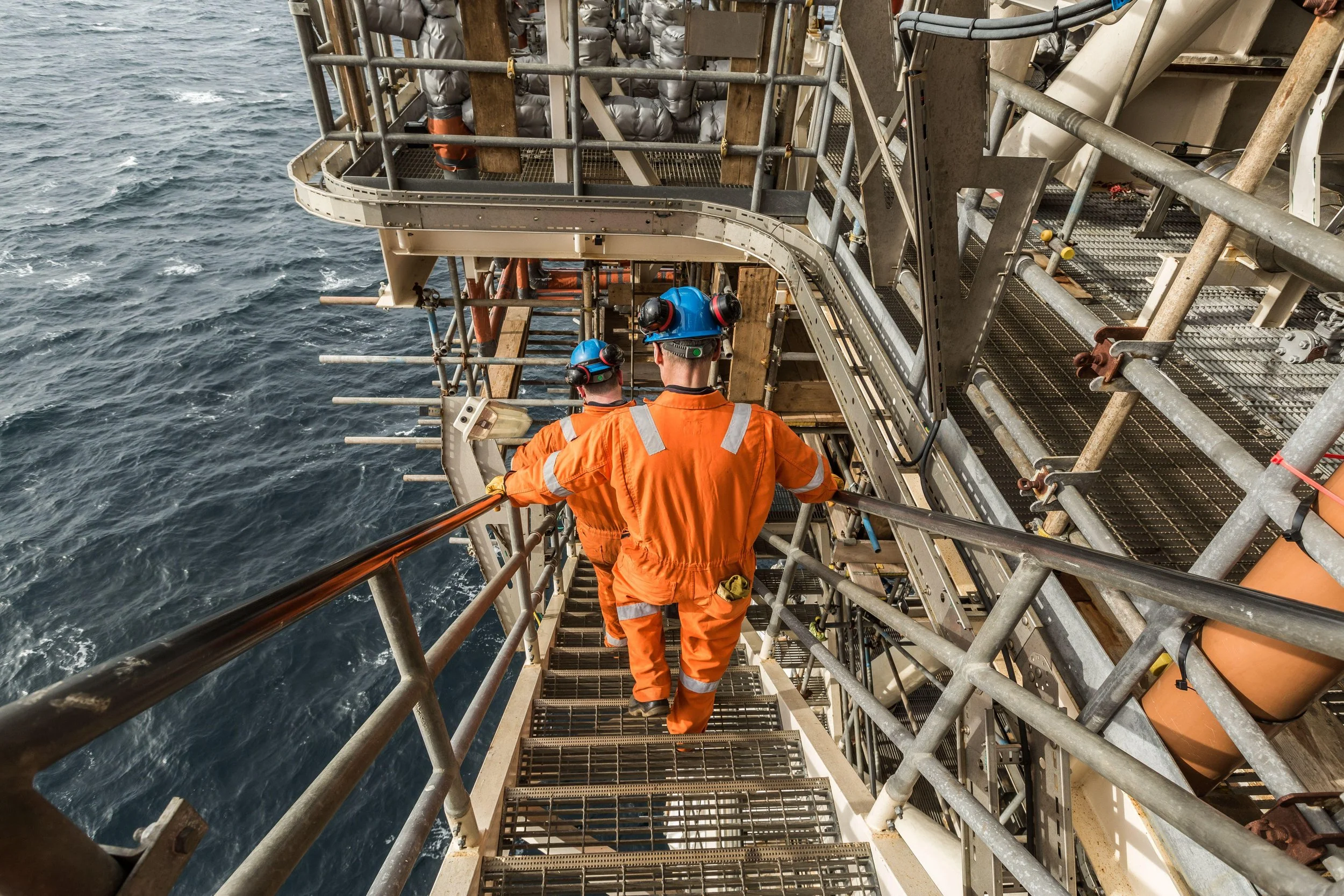
Of the thousands of direct jobs that we model decommissioning will create and protect, a large number will be in essential occupations – technical and skilled trades that are critical to the functioning of the wider economy, and in which the UK has shortages. As well as being essential occupations, many of these roles are well paid and have good long-term prospects, with strong career progression opportunities. Our report has a key focus on the following roles:
Welders
Engineering technicians
Offshore marine operatives (vessel crew)
Offshore construction and lifting operatives
Methodology
Ebberstone and Transition Economics were commissioned by Redwater Insights to undertake quantitative economic and jobs modelling, and a qualitative assessment, of the potential benefits of offshore oil and gas decommissioning in the UK.
Objectives of the report were to:
Estimate decommissioning-related jobs in the UK Continental Shelf, with analysis according to Work Breakdown Structure (WBS) elements, key occupations, timeline, and location;
Model wider economic impacts under different scenarios;
Estimate current local content;
Detail barriers to the UK decommissioning sector; and,
Build out policy recommendations to address barriers.
A key aspect of the report was to develop different scenarios to model the cost and pace of decommissioning from 2026-35, modelling different pathways with varying degrees of measures introduced. Download the full Methodology and findings document for more detail.
